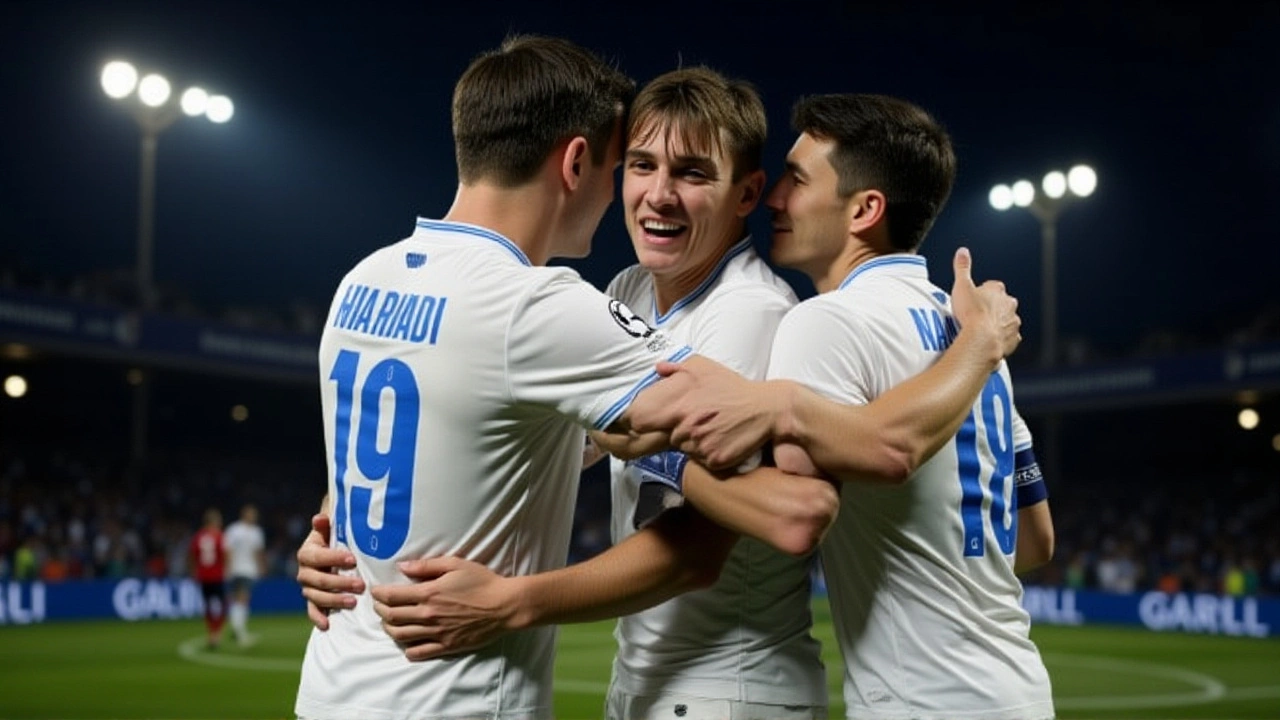
On the fifth anniversary of Diego Maradona’s death, SSC Napoli didn’t just win a football match—they reclaimed their soul. A 2-0 victory over Qarabag FK at the Stadio Diego Armando Maradona on November 25, 2025, wasn’t just about three points. It was redemption. After weeks of fractured play and mounting pressure, the team that once ruled Serie A with Maradona’s magic finally remembered how to fight—led by Scott McTominay, whose two decisive moments turned a tense evening into a cathartic triumph.
The Moment That Broke the Silence
It was the 70th minute. The crowd had been restless. The air thick with the weight of five years since Maradona’s passing. Then came the cross from the right—Noa Lang, crisp and low—and McTominay, the unassuming Scottish midfielder, rose like a man possessed. He didn’t celebrate wildly. He just pointed to the sky. The ball, parried by Mateusz Kochalski of Qarabag, had bounced straight to him. One touch. One nod. Goal. The stadium erupted—not just for the goal, but for the release.Five minutes later, it was chaos. Another cross, another flick from McTominay. The ball struck Samy Mmaee, Qarabag’s substitute, and deflected past Kochalski. StatMuse’s box score is split—some credit Marko Janković with the own goal. Doesn’t matter. What mattered was the net rippling. Napoli had doubled their lead. And for the first time in weeks, the players looked like they believed again.
The Penalty That Could Have Broken Them
Before the goals, there was heartbreak. In the 50th minute, Giovanni Di Lorenzo was brought down in the box. Penalty. The weight of expectation fell on Rasmus Højlund, Napoli’s Danish striker, signed for big things. He stepped up. Kochalski dove left—and saved it clean. The stadium held its breath. No roar. Just silence. You could feel the fear: Not again. Not here. Not tonight.But here’s the twist: Højlund didn’t crumble. He got up. He tracked back. He worked. And when the second goal came, he was the first to sprint toward McTominay, arms wide. That’s the sign of a team turning a corner—not when they score, but when they hold each other up after they miss.

Conte’s Quiet Revolution
This wasn’t just luck. It was Antonio Conte’s doing. The Italian tactician, back on the Napoli bench after a brief absence, didn’t make headlines. He didn’t scream. He just restructured. He demanded discipline. He reminded them who they were.“In recent days, you could already feel a different atmosphere,” said Di Lorenzo afterward. “And then you see it on the field.”
Under Conte, Napoli’s shape tightened. They didn’t just attack—they controlled. They completed 549 passes. Held 54% possession. Outshot Qarabag 17 to 11, with eight on target. Qarabag, meanwhile, committed just two fouls and received no cards. They played smart. They played hard. But they had no answer for Napoli’s cohesion.
Kochalski, the Qarabag keeper, was named Man of the Match. He made six saves—including a stunning double stop in the 82nd minute that kept the scoreline respectable. But even he couldn’t stop what was coming. The tide had turned.
Why This Matters More Than the Table
Napoli sits 18th in the Champions League league phase. Not glamorous. Not top of the pile. But they’re alive. After a WLDWW run in their last five matches, this win wasn’t about climbing the table—it was about climbing out of doubt.Di Lorenzo put it best: “It’s been a great evening. We’re happy.”
But beneath that calm? A storm had been brewing. Napoli hadn’t won a Champions League game since September. Their Serie A form had dipped. Fans were restless. The club’s identity—once synonymous with passion, flair, and rebellion—was being questioned.
Maradona’s ghost was watching. And on this night, Napoli answered him.
What Comes Next?
The next challenge? A home clash with Borussia Dortmund in the league phase. Then, back to Serie A against AC Milan. The momentum matters now more than ever. Napoli’s squad is thin. Injuries are piling up. But for the first time in months, there’s belief.Conte’s men aren’t pretty. They’re not flashy. But they’re stubborn. And in football, stubbornness often wins titles.
Frequently Asked Questions
How did Scott McTominay transform from midfield enforcer to Napoli’s hero?
McTominay had been criticized for inconsistent performances early in the season, often seen as too passive. But since Conte’s return, he’s been given a clear role: link defense to attack, press high, and finish chances. His two goals against Qarabag weren’t flukes—they were the result of tactical clarity. He now leads Napoli’s midfield in touches in the final third and has scored in two of the last three matches.
Why was Qarabag so defensively resilient despite losing?
Qarabag FK, despite being from Azerbaijan’s top flight, are disciplined under coach Gurban Gurbanov. They set up in a compact 5-4-1, prioritized blocking passing lanes, and relied on Kochalski’s shot-stopping. They committed only two fouls and received no cards—a testament to their tactical discipline. But their lack of attacking threat (zero big chances created) exposed their limitations against a team with Napoli’s depth.
What’s the significance of playing on Maradona’s anniversary?
For Napoli, Maradona isn’t just a legend—he’s the soul of the club. His death on November 25, 2020, left a void no manager or player could fill. Matches on this date carry emotional gravity. Players wear black armbands. Fans light candles. This win wasn’t just about points—it was a tribute. Di Lorenzo’s words, “We wanted to return to winning… and today was Maradona’s anniversary,” captured how the club sees this victory: as a promise kept.
Did Højlund’s missed penalty hurt Napoli’s confidence long-term?
Not at all. In fact, it may have helped. Højlund didn’t sulk—he chased down every loose ball, made 11 recoveries, and pressed relentlessly. His reaction after the second goal—running to embrace McTominay—showed the team’s unity. Conte reportedly told him post-match: “You didn’t miss. You just made the keeper earn it.” That mindset shift, more than the penalty itself, signaled a turning point.
How does this win impact Napoli’s chances in Serie A?
Massively. Napoli were sitting just above the relegation zone in early November after three straight losses. This win, combined with Inter’s slip-up against Lazio, lifted them to 10th in Serie A—within four points of the top six. More than points, it restored belief. Players who were questioning their roles now see a path forward. Conte’s system is working. And in Italy, confidence is often the difference between survival and a top-four push.
What’s the long-term outlook for Napoli under Antonio Conte?
Conte’s return isn’t just about results—it’s about rebuilding identity. He’s reinstalled structure, accountability, and intensity. The team’s passing accuracy has risen from 82% to 87% since his return. Young players like Højlund and Lang are thriving under pressure. If Napoli can maintain this cohesion through the winter break, they’re not just contenders for Europe—they’re a club rediscovering its purpose. Maradona’s legacy isn’t just in statues. It’s in the fight.